
FAQs
Custom Gasket Manufacturing & Material Converting
Standard Rubber Products Co. (SRP) helps customers source materials, laminate adhesives, convert flexible materials, and fabricate custom components for sealing, cushioning, insulation, vibration control, EMI shielding, and other demanding applications.
This page answers common questions about what we do, what materials we work with, which fabrication methods we offer, and how to get started on a project.
About SRP
What does Standard Rubber Products do?
Standard Rubber Products Co. manufactures custom gaskets, seals, strips, and other converted flexible material components. We support projects from material sourcing and fabrication through assembly, packaging, and shipping, helping customers find the right solution for their application.
Do you only make custom gaskets?
No. In addition to custom gaskets, we convert a wide range of flexible materials into sealing, cushioning, insulating, and adhesive-backed components for industrial and OEM applications.
What is flexible material converting?
Flexible material converting is the process of taking materials like foam, sponge, rubber, pressure-sensitive adhesives, films, and other non-metallic materials and fabricating them into finished parts. Depending on the project, this can include laminating, die cutting, waterjet cutting, laser cutting, slitting, and other converting methods.
Why choose SRP?
We combine material knowledge, converting experience, technical support, and multiple fabrication methods under one roof. That allows us to recommend the best manufacturing approach based on the material, part geometry, quantity, tolerance requirements, and application needs.
Is Standard Rubber Products Co. ISO 9001:2015 certified?
Yes. Standard Rubber Products Co. is ISO 9001:2015 certified.
Gasket Materials, Adhesives & Supplier Brands
What types of materials does SRP work with?
We work with a broad range of flexible materials, including foam, sponge, rubber, pressure-sensitive adhesive materials, EMI/RFI materials, silicone, closed-cell foam, closed-cell sponge rubber, compressed non-asbestos fiber, sheet rubber, and branded material platforms from leading suppliers.
Do you convert specialty materials from brands like 3M or Rogers Corporation?
Yes. Our site features material families and products from suppliers including 3M™, Rogers Corporation, Rubberlite Inc., and Specialty Silicone Products (SSP), along with many other gasketing and converting materials used across industrial and OEM applications.
Do you make adhesive-backed parts?
Yes. We manufacture adhesive-backed gaskets and other converted parts by laminating the selected pressure-sensitive adhesive to the base material before fabrication. Adhesive-backed constructions can help with peel-and-stick assembly, part positioning, sealing, cushioning, and bonding.
Can you help select the right adhesive?
Yes. Choosing the right adhesive depends on the substrate, environmental conditions, temperature range, surface energy, and performance requirements. We can help review the application and recommend an adhesive system that fits the project.
Where can I find technical data sheets and material specifications?
Our website includes a data sheets section where you can browse material-specific information and downloadable resources.
SRP Capabilities & Processes
What fabrication and converting methods do you offer?
Our capabilities include precision die cutting, rotary die cutting, waterjet cutting, laser cutting, reciprocating knife cutting, and advanced automatic slitting. We choose the process based on the material, design, production volume, tolerance needs, and overall project goals.
When is precision die cutting the right choice?
Precision die cutting is often a strong option for medium- to high-volume production runs, especially when parts require repeatability, efficiency, and tight tolerances in flexible materials.
When is rotary die cutting the better fit?
Rotary die cutting is a strong choice for high-volume parts, exact-fit applications, and peel-and-stick constructions. It can also support kiss cutting, perforations, liners, and multi-layer constructions for efficient assembly.
When is waterjet cutting the better option?
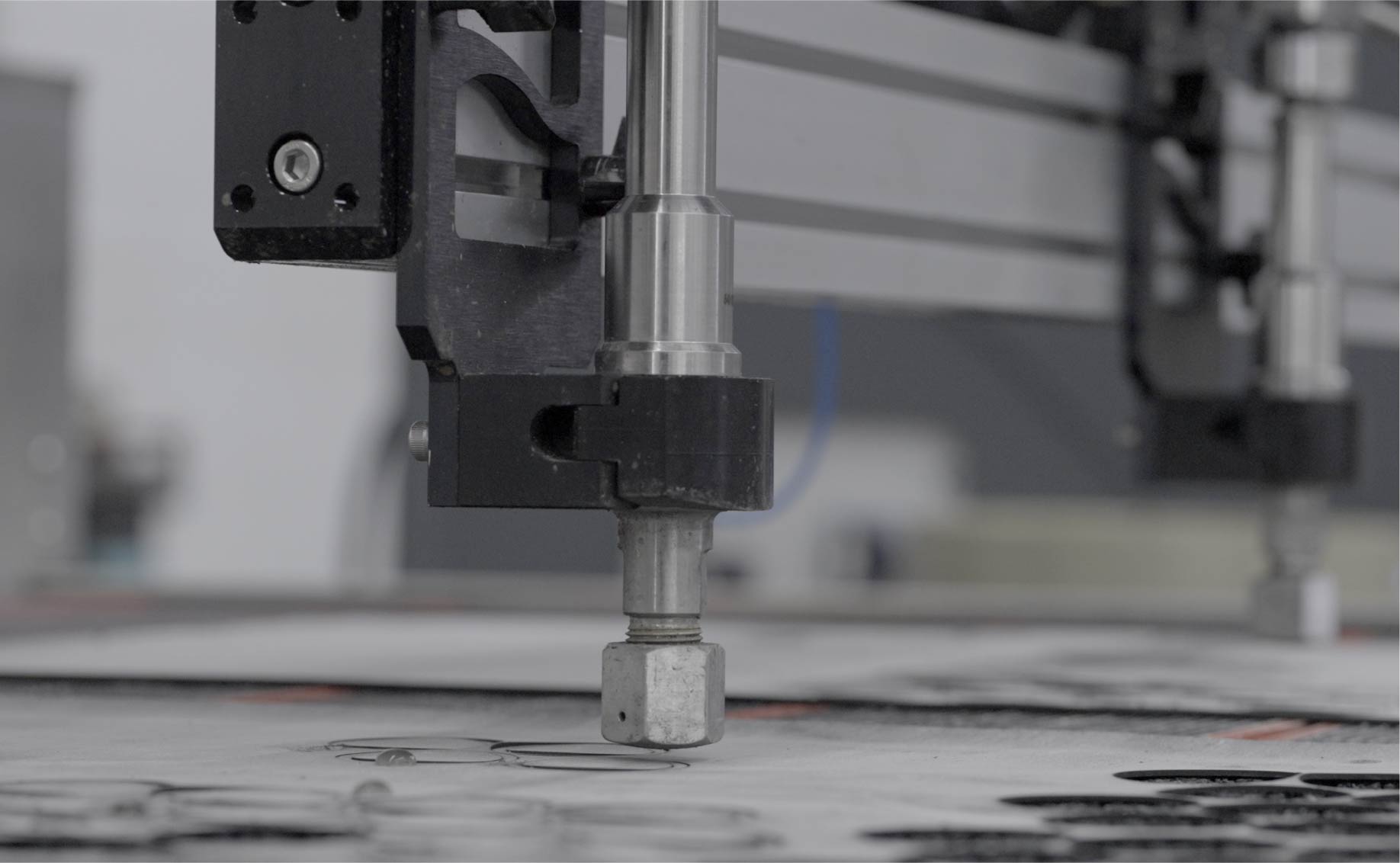
Waterjet cutting is often ideal for thicker or more rigid flexible materials, lower-volume projects, and parts where avoiding custom tooling helps reduce cost and lead time.
When is laser cutting a good option?
Laser cutting is a great fit for small and low-volume production runs, rapid prototyping, and part sampling. Because it does not require custom die tooling, it can be a fast way to start production once the material is available.
What is Reciprocating Knife Cutting used for?
Yes. SRP’s Reciprocating Knife Cutting services are useful for larger gasket shapes, small- to medium-volume runs, rapid prototyping, proof-of-concepts, and samples. It is software-guided and does not require expensive metal tooling.
Do you slit materials into custom widths?
Yes. Our automatic slitting capabilities allow us to cut foam, rubber, adhesive tapes, and other non-metallic materials from master rolls into custom widths for your application.
Does SRP offer rapid prototyping and material sampling for custom designs?
Yes. SRP provides rapid prototyping, proof-of-concepts, and samples to help validate your design before full-scale production. We utilize tool-less fabrication methods, including laser cutting, waterjet cutting, and reciprocating knife cutting, which eliminate the need for expensive custom die tooling. This approach allows SRP to provide high-quality samples with faster lead times.
Applications & Starting a Project
What types of engineering challenges can SRP’s custom gaskets and seals solve?
SRP solves complex design and performance hurdles by combining material expertise with precision fabrication. Our custom-converted components are engineered to address specific technical requirements, including adhesive-backed gasketing, electrical insulation, EMI shielding, electrical enclosure gasketing, data center components, EV charging solutions, flame barriers, high-temperature gasketing, vibration dampening, and other custom converting needs.
Which industries do you serve?
We support customers across a variety of industries, including industrial, electronics, power and utilities, renewable energy, displays, lighting, HVAC, medical, automotive, electric vehicles, and appliances.
What information should I send to receive a fast, accurate quote?
The best quote requests include a drawing, print, or CAD file when available, along with the material or product of interest, estimated quantity, whether adhesive backing is needed, and any relevant project details. The more information you provide, the easier it is for us to review the application and recommend the right approach.
Can I upload CAD drawings and project files?
Yes. Uploading reference drawings, engineering prints, and 3D CAD files is the most effective way to improve quote accuracy and speed up the technical review process. Providing these files allows our team to evaluate part geometry and recommend the most efficient converting method for your project.
How do I get started?
The easiest way to get started is to contact us with your project details. If you already have a drawing, material idea, quantity, or application notes, send them over and our team can help evaluate the best material and converting method for the job.